2 The River's First Braid
CANADA: A Braid of Three Threads

Chapter Two
The First Thread
From the dark depths of fifteen to thirty thousand years of history emerged a complex mosaic of unique, complex cultures, living on what many traditions describe as Turtle Island. I don’t know their stories, which are better told by those that do.
But I do know they seem to have been long cut off from the rest of the human species - until some had a sudden chance meeting on a riverbank.

As the story goes, the French explorer Cartier pulled up through the St. Lawrence River in the summer of 1535 and stopped near an Iroquoian village.
Cartier asked where he was. Somewhat confused, the man told him the word for “a village” was kanata. Cartier looked around at the vast landscape, finally having the name for this wild, newly discovered Northern land, which he now called Kanata.
And so while there was absolutely nothing new about human habitation in this corner of the world, what was new was the French arrival in it. And from that came a point of contact that began with a failed translation but grew into a whole new national concept.

A River, Two Threads, and a Braid
The concept of Canada was born from a misunderstanding about Kanata by a French man upon meeting an Iroquoian man on the banks of the St. Lawrence. This was a brutal and politically complex world, and Cartier followed up his introduction to it by abducting the local Iroquoian chief and bringing him and several others back to France, where pretty much all of them would die away from home.
And so, the French and many of the various six to ten unique First Nation peoples along the St. Lawrence River had their share of conflict, which many historians argue over to this day. But as bad as many of the interactions were, the French could not afford to begin outright war upon arriving. The territory was just too cold. And the Northern winter punished both war and ignorance with death.
It Taught Cooperation
Life on the St. Lawrence was humbling. And the French learned through death that they just did not understand this part of the world. The land seemed vast, wild, and unforgivingly ruthless. The animals, new. Their clothing, made from animal skins adapted to a totally different climate. The geography was wholly unknown. And most importantly, they didn’t know the people. And worst of all, figuring out any of this was done on a clock, with the threat of winter ever bearing down on them with the arriving force of a white apocalypse.
The French brought with them the wealth, technology, and knowledge of a powerful corner of the world which was for the time being, absolutely useless here. In early Canada, the European settlers were poor, ignorant, and profoundly ill-equipped for survival. They. Needed. Friends.
The First Nations helped. The Algonquin and Wendat First Nations became essential to survival. Over time, this became a friendship that didn’t just teach them how to endure the wintery wilderness, it allowed them to explore it.
Quebec, Trois-Rivières, and Montreal started as desperate toeholds in this broader wilderness now commonly being referred to as Canada. And then with time, culturally hybrid gateways to a whole new frontier of Western wilds. And from these outposts, a rebellious class of free-spirited Frenchmen emerged and then ventured into that unknown. In most cases, never to return.
It Started with a Boy
After founding Quebec City, Champlain sought to build an alliance with the Wendat, then commonly called the Huron. He sent a young French boy to live with them, hoping the child would learn their language and later help convince them to trade furs with the French instead of other rival Europeans (like those bloody English).
When Champlain returned a year later, he was shocked to find the boy not only dressed like the Wendat, he spoke their language fluently. That boy, named Brûlé, grew into a legendary explorer, venturing deep into the wilds. And his legend inspired an entire generation of Frenchmen to live among the First Nations and learn their ways.
With the stroke of a mere story, an entire people’s imagination was lit with the lure of adventure, and with only that, sparked the early signs of a whole new culture.
The Coureurs des Bois
Adventurers like Brûlé sparked a wild, free-spirited movement into the heart of Canada. In pursuit of rich beaver pelts, some of the boldest Frenchmen defied laws and escaped into the wilderness alone. Many chose never to return. These became known as the Coureurs des Bois, men who played by their own rules, but quickly learned they could never rule the winter alone.
Humbled, they adapted. The Coureurs des Bois embraced the knowledge of the First Nations. They built long-term relationships, married into local communities, and raised children together.
Together, the Coureurs des Bois and the First Nations exchanged technology, clothing, weapons, language, and geographic knowledge. What began as trade became something deeper. A cultural synthesis. They gave rise to a whole new kind of human being, never before seen on Earth.
The Children of the Woods
For generations, the descendants of the Coureurs des Bois breathed, ate, clothed, and hunted in ways that were neither purely European nor purely First Nation. Their children were multilingual. Their knowledge was multicultural. Their tools were multifaceted. Their understanding of the land was unrivaled.
This mixture of peoples, which later fueled the rise of the Métis, became a whole new civilization, neither First Nation nor European. A hybrid that drew from both worlds and mastered the exchange between each.
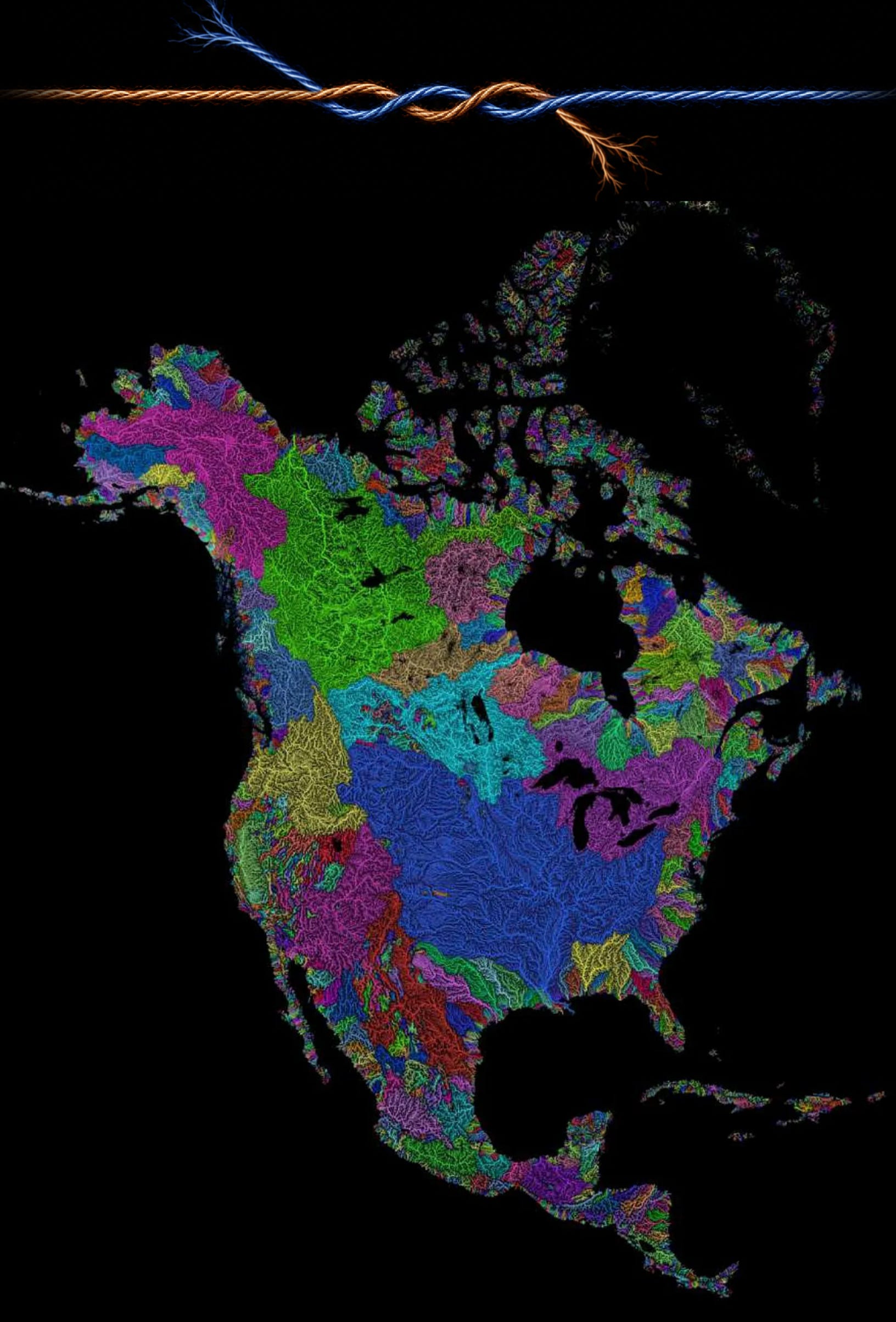
Their most powerful attribute was their intergenerational network of relationships, which spanned the Northern continent and gave them access to a secret, millennia-old means of traveling over land at unparalleled speeds. Rivers interwove this wilderness, and if you knew how to find them, and where they led, you could become one of the most powerful peoples on the continent.
In spite of their relatively low numbers, that is exactly what the river-powered Métis became.
COMING SOON
Russians from the North. Spanish from the South. English from the East. French from the East. Thousands of Indigenous communities, in between. Populations around the world, surging. Ambitions, rising. Pressures, mounting. Everyone, used to both generosity and violence, were now barrelling towards a whole new era of war.
And all it would take to light, was a single match.

The question of Canada’s National identity is a conversation lacking many voices. So your Subscriptions, Comments, Likes, and Shares all mean a lot.
Thank You.
PREFACE
Chapter One

Chapter Two

Chapter Three

Chapter Four

This first braid is great but incomplete, if it does not include the Acadians who are not considered French Canadian but are a founding culture in Canada. The Acadians mostly settled in the Maritimes, not on the St. Lawrence River, and their settlement (Port Royal, 1605) preceded that of Québec. The Acadians got along well with the indigenous Mi'kmaq people, and in fact, their survival depended on it. They thrived in Acadia despite hardships for over a century before being expelled. ❤️🇨🇦
Love how you point out that cooperation was essential for survival. Not just a few winters, like New England, but for generations. A different. DNA