4 The Devil's First Braid
A Braid of Three Threads

CHAPTER 4
Britain had become an empire. But could they afford it?
Britain had won North America. But could they keep it?
A Complex Continent
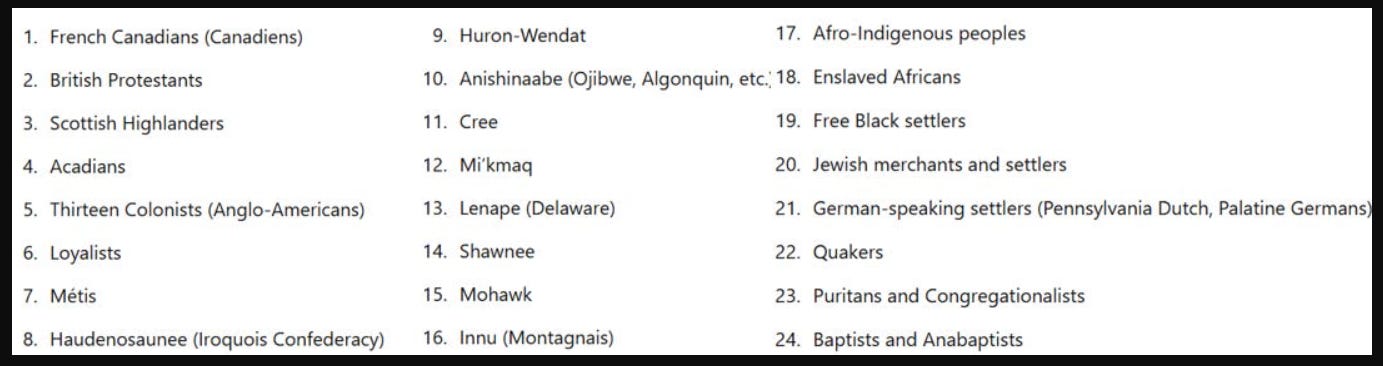
A complicated mosaic of disparate cultural groups spanned British North America. Few of them got along, and none of them wanted to be told what to do. And told what to do by the British, no less. No, thank you.
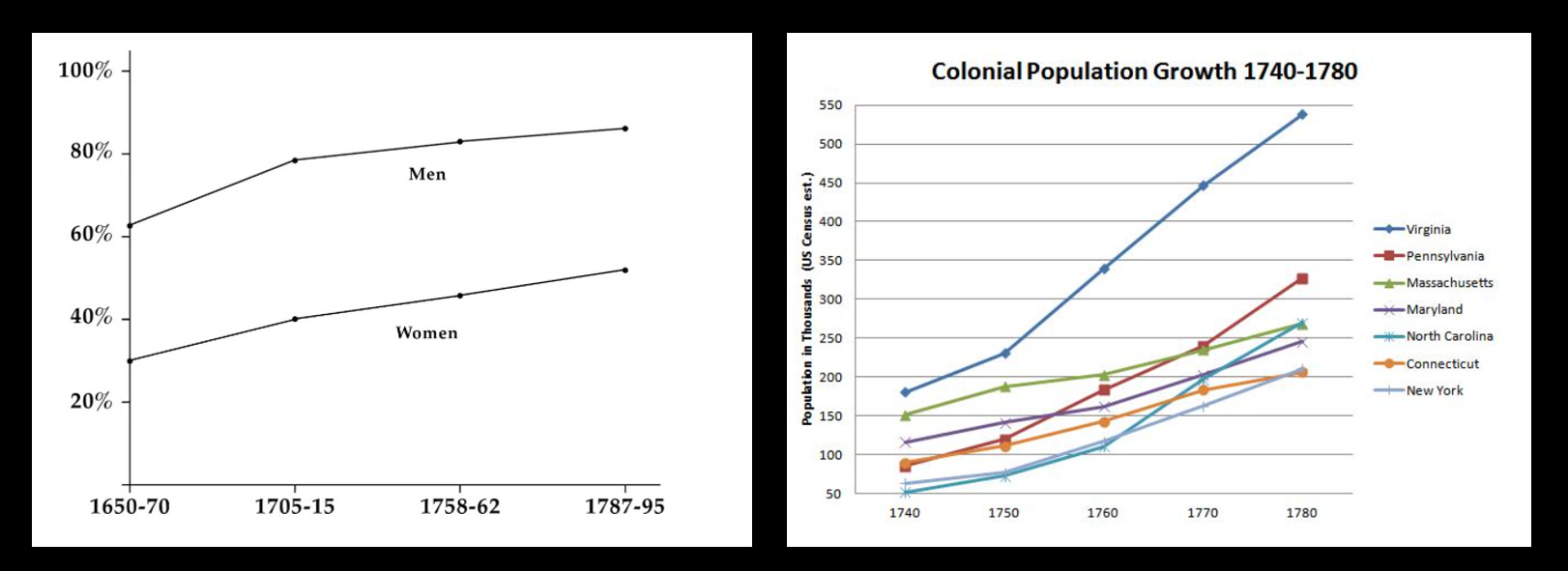
While the British population dwarfed most of the world in their ability to read and write during the Seven Years’ War, a newly emerging corner of the world now dwarfed Britain.
Men in the 13 colonies had grown their literacy rate to 90%! The same forces that had just marshalled Britain’s rise to a global power now festered in the heart of its newly won prize.
The 13 Colonies
Reason, science, and education were transforming Europe in what was called the Enlightenment. Population levels across the Western world were exploding, and nowhere was more exciting to try out these new and inspiring ideas than the relatively blank slate of the 13 colonies.
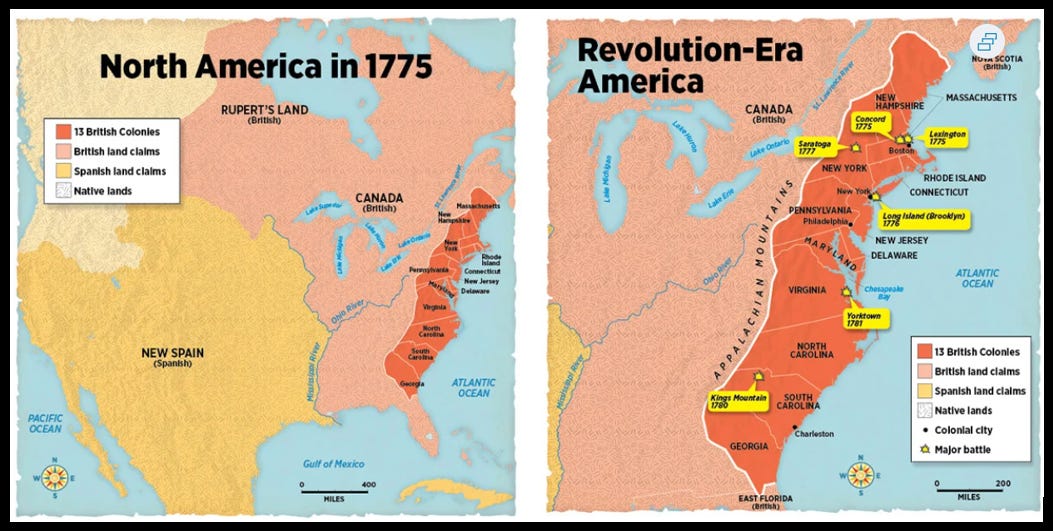
A population of two million people was bursting at the seams, anxiously anticipating the infinite expanses of life beyond the Appalachian mountain range. Great dreams were festering in the hearts and minds of colonial leaders. New methods of agriculture, transport, and resource extraction were ripe to turn the Ohio Valley and the Mississippi watershed into the most powerful engine of agricultural bounty in human history.
If the colonies could only get past those mountains, the Mississippi held the most plentiful farmland and the most navigable waterways in the world.
Excitement was high. A sense of destiny filled the air. The future was West. And the road there was inevitable.
Until suddenly, Britain squashed it all.
Apparently, Running an Empire Is Hard
Britain may have won the war for North America, but they had not yet won the peace. An unprecedented patchwork of cultures, languages, and religions now vied for influence across the continent. Needless to say, the complexity. Was. Vast.
Suddenly humbled by the cultural nuances of managing an empire, not just in North America but around the world, Britain sought stability above all else.
If they were going to hold this whole thing together, they would need to learn to compromise. If they were going to facilitate compromise with so many different cultural factions, they were going to need to embrace tolerance.
And more than that, they sensed the 13 Colonies slipping. The war with France had nearly bankrupted Britain, and they needed the Thirteen Colonies to chip in. “No taxes without representation” was a legitimate grievance for the Americans, though they still only paid roughly 1/10th the taxes that a British citizen paid back home.
A split was forming. A push for American independence was coming. And so, after centuries of fighting for control of North America and finally having won it, Britain was now poised to lose it forever.
Britain needed support. Concessions to the French Canadiens were suddenly not so intolerable. Alliances with First Nations became acceptable.
In one last desperate gamble to hold on to their North American empire, British Parliament rose above centuries of prejudice and struck what many colonists saw as a knife through the heart. A deal with the devil. A deal with three devils.
The devil being Indian. The devil being Black. And the devil being French.
The Indian Devil
The Royal Proclamation of 1763
Within the same year that the Seven Years’ War with France ended, Britain did a policy reversal and struck the Royal Proclamation. A line was drawn right along the Appalachian Mountains. The Americans were told to abandon their plans to expand West and stay in the East. The West, meanwhile, was now “reserved” for the Indigenous.
This was a commitment protected by the Crown. It laid the foundational framework for nation-to-nation relations between Britain and the First Nations, and would inform all future agreements that followed. The British and the First Nations had finally come together in a formal agreement. The first days of an early braid. An extraordinary North American document that the Americans felt deeply betrayed by.
The Colonies had just fought France so that they could expand West. The future was West. The opportunities were West. And now the Crown would tell them to dream of paradise, but never enter it?!
Pressure mounted.
The Black Devil
The Somerset Decision — 1772
We all know that the British Atlantic economy relied on slavery.
However, a new Christian movement was quietly building in England, of all places, to abolish slavery. Stories of the horrors of the slave trade were seeping into the public consciousness, and individual British citizens were becoming morally indignant with the practice. But while this movement grew, made up of simple door-to-door conversations and public articles, no defining legal precedent had been set.
Until a 1772 shockwave would go around the world and reverberate for centuries to come.
An African slave named James Somerset was brought from Virginia to England. Upon his arrival, he escaped. But after being captured later, and prepared to be resold in the Caribbean, a grassroots abolitionist group intervened and brought his case to court. Lord Mansfield shocked the political establishment.
“The state of slavery is of such a nature that it is incapable of being introduced on any reasons, moral or political. It is so odious, that nothing can be suffered to support it, but positive law. [...] Whatever inconveniences, therefore, may follow from the decision, I cannot say this case is allowed or approved by the law of England; and therefore the black must be discharged.” — Lord Mansfield, June 22, 1772
Let the definition of the word “odious” drive home the cultural impact of the point Lord Mansfield was making: “extremely unpleasant, repulsive, or deserving of hatred.” Those were the words he was using to describe not Somerset, but slavery itself.
To everyone’s surprise, Somerset was released. Simple as that. In the Thirteen Colonies, he was a slave. In England, he was free. Abolitionists of Black and white skin colour celebrated across England. The poet William Cowper wrote that “we have no slaves at home; then why abroad?”
The Somerset Decision did not end slavery across the British Empire, but it set a clock to slavery’s demise and sent a legal and moral warning to slaveholders around the globe. And those warnings were perhaps felt nowhere more acutely than in America.
A majority of the signers of the Declaration of Independence enslaved people, and many more from the colonial elite tolerated and protected it for their own economic and political gain.
Abolition was a threat to colonial prosperity and one more insult to the newly emerging American way of life.
Anger boiled.
The French Devil
The Quebec Act — 1774
And now, the French.
Britain had won Quebec and earned the Canadiens.
But now what were they going to do with all these unruly French?!
They spoke a different language: French. They followed a different religion: Catholicism. And they would only adhere to a different form of law: Civil Law. They were a major population centre, and their economic and diplomatic ties spread farther across the continent than the English had even explored, never mind settled.
And so, with suspicion about American loyalty growing in the Thirteen Colonies, Britain needed to do whatever they could to anchor their position in North America. So they came up with a deal. And make no mistake, it was a desperate bribe for the ages.
This was the Quebec Act. Stay loyal to the Crown, and Britain would guarantee to protect French language, French Catholicism, and French Civil Law. And more than this, the Act expanded Québec’s boundaries deep into the interior, affirming the centuries-old partnership between the French and the First Nations and reaffirming the protection of Native territory from colonial encroachment.
It was a powerful affirmation of that bicultural partnership, which Britain would double down on to solidify economic and political stability.
And while it did not make French Catholics entirely equal in any modern democratic sense, it did something extraordinary for its age. It forced British rule to accommodate French Catholic survival rather than erase it.
So not only did Britain completely block American opportunities to expand West, they lifted up the rights and cultures of their mortal enemies: the Catholic French and the Indigenous nations the colonists saw as standing in their way.
This was no longer a pot bubbling. This was a fundamental insult to American hegemony. And certain factions within the 13 colonies absolutely lost it.
The powder keg ignited.
The Three Cultural Acts
There has been a lot of storytelling about what caused the American Revolution.
The cultural cleavages present at its inception have been streamlined or outright buried to make way for uniting narratives of national myth. Different colonies, after all, had different grievances, and the geopolitical ones get all the attention.
But what shocked me when I began researching this project was how significant the cultural motivations appeared to be. The dates speak for themselves.
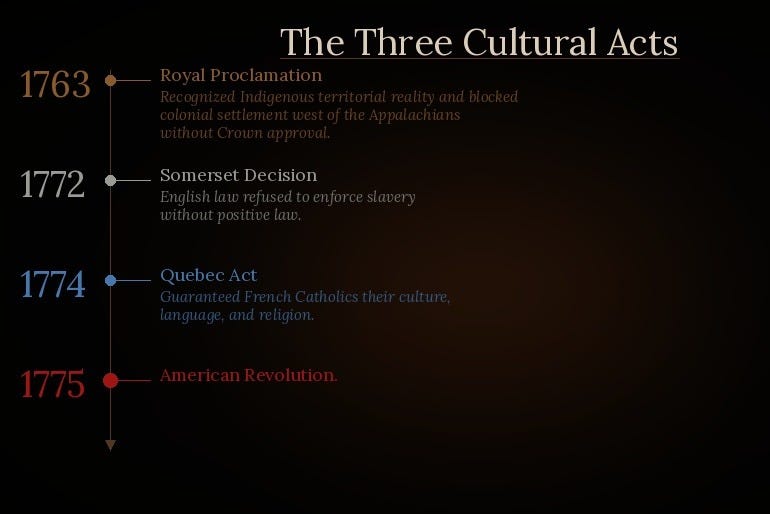
First Nations territorial rights, Black freedom claims, and French Catholic survival were all making their way into imperial law. Britain was making the future of British North America multicultural.
And the colonies rejected that.
From The Ashes of the Revolution
Tea, Taxes, and Treason
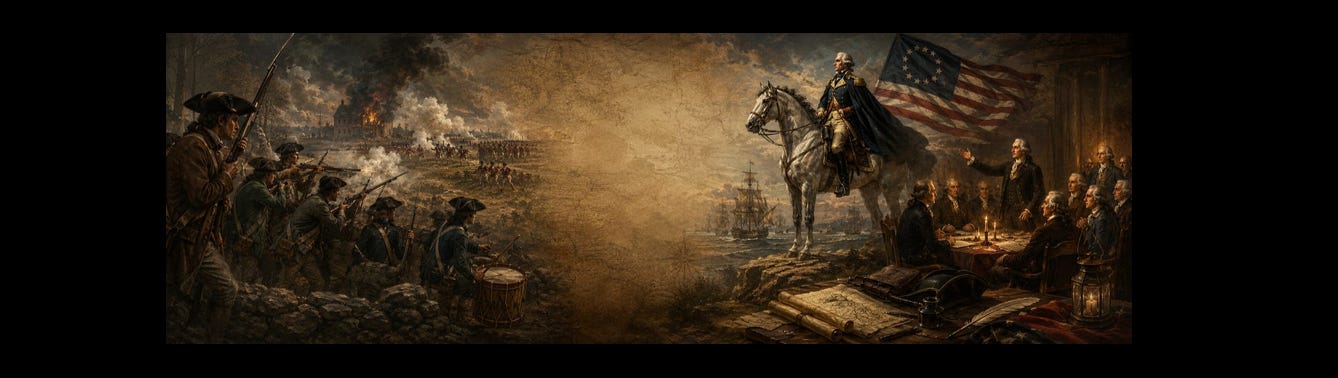
Enraged, American independence lit and blanketed the land in musket fire, cannon smoke, and blood.
The ability of Americans to read and write to each other produced inspiring articles that ripped across the colonies like wildfire. The decentralized communication overwhelmed British expectations and fueled enlistment across all classes.
George Washington was no longer this tall, thin, scrawny little surveyor. He had risen through the ranks of the Virginia provincial military into a colonel by the end of the Seven Years’ War. And now, with his sympathies slowly flipping to the revolutionaries, he turned a career of learning under British military leadership against them, and took full command as commander in chief of the Continental Army.
Washington would go on to lead the colonies in battle through eight years of war, eventually succeeding alongside the broader American style of hybrid conventional and guerrilla-warfare tactics. Twenty-five to fifty thousand people would lose their lives during the war. Afterword, it would take a national campaign to convince Washington to become the first president of the United States. And without any constitutional obligation to limit himself to two terms, he voluntarily gave it up, establishing a peaceful transition of power after eight years as president, which has held up for nearly all of American history.
And so, while later stories of national myth would obscure the founding spirit of the United States, George Washington was one individual who unequivocally embodied the best ideals of the new republic. Indeed, he not only lives up to his modern-day legend, he probably surpasses it.
The 14th Colony?
But in the early days of the war, Washington’s success was uncertain. France was eager to stick it to the British, and provided critical military, financial, and diplomatic support. Ironically, it was an expense that would catalyze their own bloody revolution, where the Reign of Terror would sever thousands of heads from their shoulders.
Ironically, hard pressed against the British, the colonies paused their dislike for the French, and invited Québec to join their rebellion. The Articles of Confederation even offered a blanket invitation for Canada to join the United States as the 14th colony:
Article XI. Canada acceding to this confederation, and joining in the measures of the United States, shall be admitted into, and entitled to all the advantages of this union...
But Québec refused. They knew from the start that, despite centuries of war with the English, the Americans could not be trusted to preserve Francophone culture.
Québec guessed right. In response to the refusal, the colonies invaded Québec, and after taking Montreal, were eventually beaten back by both winter and war.
Québec had correctly chosen Britain over America.
And they knew that if Québec was to endure, it would need to stay British.
The desperate bribe worked.
The Quebec Act held.
The Devil’s First Braid
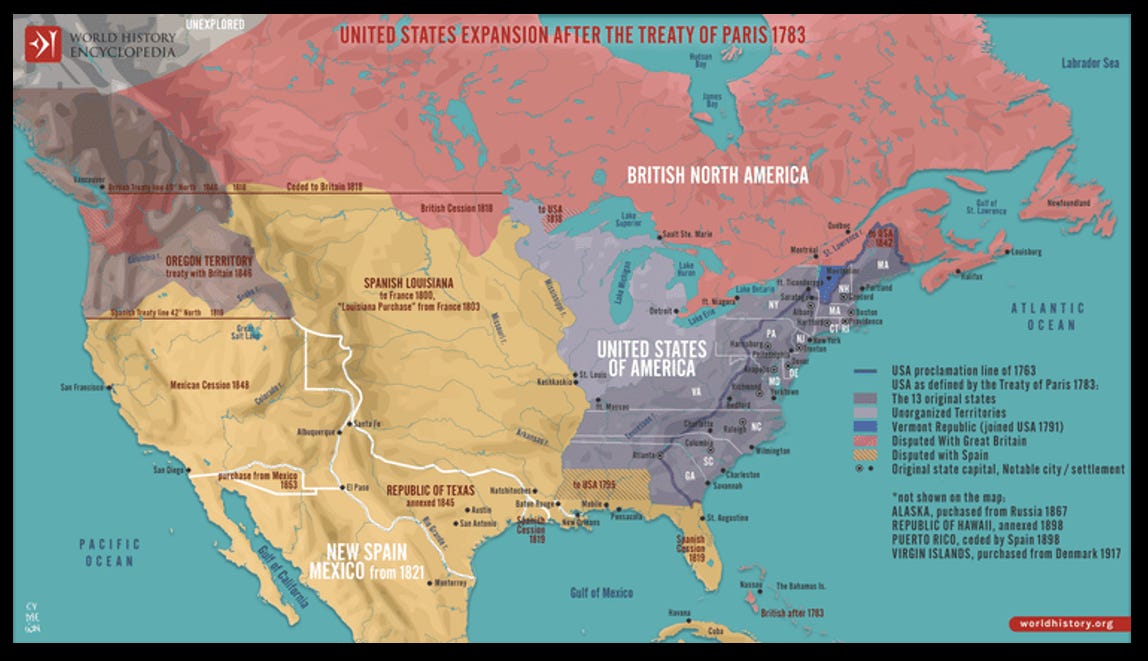
The United States of America was not merely born from a desire to avoid taxes, self-govern, or self-represent. It was also born from a refusal to accept Britain’s imperial compromises with French culture, Catholic religion, First Nations, and the limits those compromises placed on colonial expansion.
The Revolution was not universally supported. Estimates put a mere 30% of the American population that actually wanted to secede. Another 30% wanted to stay British. 40% were undecided. An active minority tipped the colonies into revolution. And when it was over, many Loyalists migrated north into the Canadas, settling beside Québec in what we now call Ontario.
Upper Canada, Ontario, was governed by British common law. Lower Canada, Québec, retained French civil law. The Métis and First Nation groups to the west were, at least in principle, free to continue living independently in their territories according to their own traditions and customs.
French and First Nation cultures had woven together along the continental waterways for over two hundred years. Now English and French cultures were weaving together at the Laurentian centre. And British and First Nation relations were developing by way of proclamation.
Three threads of culture, tentatively aligned, held together by a Crown that had nearly lost the entire New World and was making every accommodation possible to strengthen its grip.
The First Nations, coureurs de bois, and Métis still had the West. A small English population had the centre. And Britain’s most populous power base in the Canadas was French.
First Nation - French - British
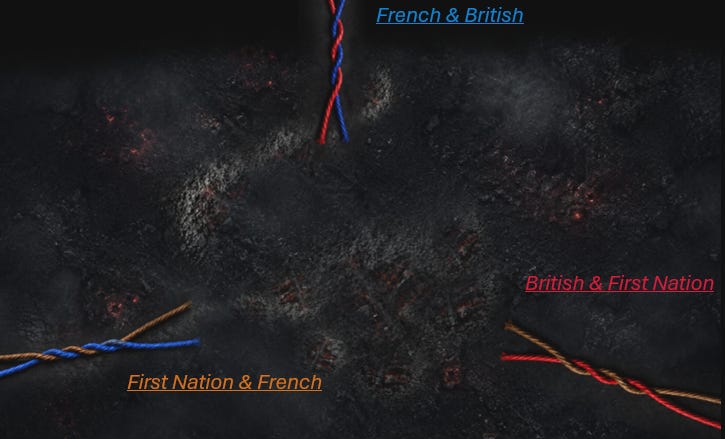
This was not yet a tricultural union. But these threads were braiding into a newly emerging identity in resistance to a rising power in the South.
America’s founding spirit was splintered at its inception by one faction demanding monocultural dominance and the other demanding assimilation.
In contrast, Canada’s founding spirit was made not through moral imperative or grand strategic vision, but in defiance of the cold from the North and the threat of violence from the South. Three sets of two strands wove into a single braid of survival.
And it is these first braids that formed the DNA helix of Canada’s national identity, and which would eventually blossom into the first policy-driven multicultural country in the world.
But this fragile braid was about to be tested.
America had earned its independence.
But America. Wanted. More.
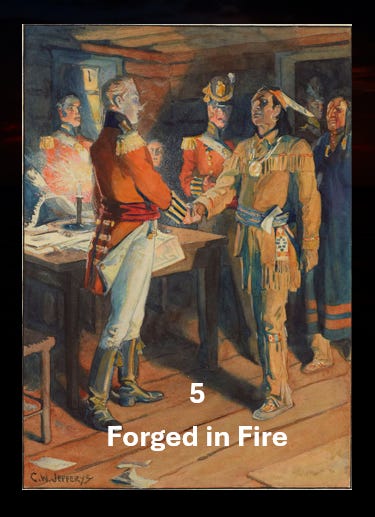
Up Next
1812
PREFACE
Chapter One

Chapter Two

Chapter Three

Chapter Four
The American reaction against multicultural diversity is baked right into the original DNA.
Canada was “cold to the north, violence to the south”. We stick in the middle with each other, figuring it out as we go.
You’re the Canadian version of Heather Cox Richardson.